



Introduction:
Retirement may seem far off, but the earlier you start planning, the more secure your future will be. With rising living costs, unpredictable healthcare expenses, and people living longer than ever, having a solid retirement plan is no longer optional—it’s essential for peace of mind. Whether you dream of traveling the world or simply enjoying a stress-free retirement, financial stability is key to making it happen.
In this article, we’ll explore everything you need to know about Personal Finance and Smart Retirement Planning Tips for a Secure Future. You’ll discover the best retirement planning tools, learn how to create a retirement financial strategy, and get practical tips to make smart decisions today for a better tomorrow. No matter your age or income level, it’s never too early—or too late—to take control of your financial future.
What Is Retirement Planning?
Retirement planning is the process of preparing your finances and lifestyle for life after you stop working. It goes far beyond just saving money—it’s about setting goals for your future, estimating how much you’ll need to live comfortably, and making smart decisions today to ensure long-term security.
Effective retirement planning involves several key components: estimating future expenses, identifying income sources like pensions or investments, and selecting the right financial tools to grow your savings. It also includes planning for healthcare costs, inflation, taxes, and even how you’ll spend your time during retirement.
At its core, retirement planning ensures you can maintain your desired lifestyle without the fear of running out of money. Whether you want to retire early or continue working part-time, a personalized plan gives you confidence and control over your financial future.
Why Retirement Financial Planning Matters

Retirement financial planning is the foundation of a secure and stress-free life after work. Without a clear plan in place, it’s easy to underestimate how much you’ll need—or overestimate how far your savings will stretch. A solid financial strategy helps you prepare for the realities of aging while maintaining the lifestyle you want.
One major factor is inflation—the cost of living will likely continue to rise over time. What seems like enough money today may fall short in 20 or 30 years. Healthcare costs are also a growing concern, especially as medical needs increase with age. Without careful planning, unexpected expenses can quickly eat into your retirement savings.
By focusing on retirement financial planning, you can calculate how much you’ll need, track your progress, and adjust your savings or investments as needed. It’s not just about having enough—it’s about having confidence in your financial future.
Best Retirement Planning Tools (With Examples)
Using the right retirement planning tools can simplify the process and give you a clear picture of your financial future. These tools help you estimate how much you’ll need, how long your savings will last, and what adjustments you may need to make along the way.
Here are some of the most effective and user-friendly options:
Fidelity Retirement Score
- This tool provides a quick assessment of your retirement readiness based on your current savings, age, and goals. It also offers actionable recommendations to improve your plan.
Personal Capital Retirement Planner
- A more advanced tool that lets you track your cash flow, investments, and expected expenses. It generates a detailed projection of your retirement finances and highlights any gaps.
Vanguard Retirement Nest Egg Calculator
- Ideal for estimating how long your retirement savings might last based on different withdrawal rates and market return scenarios.
Mint
- While not a retirement-specific tool, Mint is excellent for tracking your overall financial health, managing budgets, and monitoring spending habits—all of which impact retirement planning.
When selecting a tool, prioritize those that include features like goal-setting, real-time projections, tax planning, and inflation adjustments. These tools serve as a practical guide for building a stable and informed retirement strategy.
Step-by-Step Retirement Planning Strategy
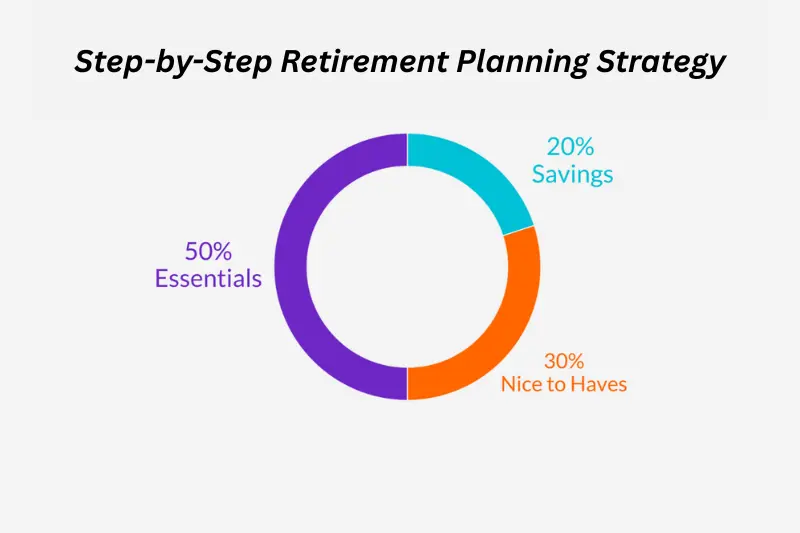
A well-structured retirement plan doesn’t happen overnight—it’s built step by step. Whether you’re just starting or refining your strategy, the following approach will help you stay on track and reach your retirement goals with confidence.
Start Saving as Early as Possible
- The sooner you begin, the more time your money has to grow through compound interest. Even small contributions can add up significantly over time.
Define Your Retirement Goals
- Think about when you want to retire and what kind of lifestyle you hope to maintain. Do you want to travel, downsize, or continue working part-time? Your vision will shape how much you’ll need to save.
Estimate Future Expenses
- Calculate your expected monthly expenses in retirement, including housing, food, travel, and healthcare. Always adjust for inflation and possible medical costs.
Identify Income Sources
- Include pensions, Social Security, 401(k)s, IRAs, rental income, investments, or side businesses. Knowing your income sources helps you plan how much more you need to save.
Build a Retirement Budget
- Create a realistic monthly retirement budget based on your income and estimated expenses. This ensures your savings will last as long as you need them.
Use Retirement Planning Tools
- As discussed earlier, use reliable tools to project your savings, evaluate your progress, and test different scenarios.
Monitor and Adjust Your Plan Regularly
- Life changes, and so should your retirement plan. Review it annually or after major life events—marriage, job changes, inheritance, or economic shifts.
Planning for retirement may seem overwhelming, but by breaking it into clear, manageable steps, you can build a secure and sustainable financial future.
Mistakes to Avoid in Retirement Planning
Even with the best intentions, many people make critical mistakes that can derail their retirement goals. Understanding and avoiding these common errors can save you time, money, and stress in the long run.
Delaying Retirement Planning
- One of the most damaging mistakes is waiting too long to start. The earlier you begin, the more time your savings have to grow. Procrastination often leads to smaller savings and fewer options later.er.
Underestimating Healthcare Costs
- Many retirees are caught off guard by the rising cost of healthcare. Failing to account for medical expenses—including long-term care—can quickly drain your savings.
Ignoring Inflation
- Inflation gradually reduces your purchasing power. Without adjusting your retirement plan for inflation, your savings may fall short of covering your future needs.
Relying on a Single Source of Income
- Depending solely on Social Security or a pension is risky. A diversified income strategy—including investments, savings, and part-time income—offers better financial stability.
Not Updating Your Plan
- Life changes—marriage, job shifts, market fluctuations—require regular plan reviews. Ignoring these changes can lead to outdated or ineffective retirement strategies.
Avoiding these mistakes can significantly improve the chances of a secure and fulfilling retirement. Preparation, awareness, and flexibility are key.
FAQs About Retirement Planning
Q1: When should I start retirement planning?
The best time to start retirement planning is as early as possible. Starting in your 20s or 30s gives your savings more time to grow through compound interest. However, it’s never too late—beginning in your 40s or 50s can still make a significant impact if done strategically.
Q2: How much money do I need to retire comfortably?
There’s no one-size-fits-all number. A common rule is to aim for 70% to 80% of your pre-retirement income per year in retirement. Use retirement calculators to estimate how much you’ll need based on your desired lifestyle, expenses, and life expectancy.
Q3: What are the best retirement planning tools?
Popular tools include Personal Capital, Fidelity Retirement Score, and Vanguard’s Nest Egg Calculator. These platforms help you track savings, project future income, and test different retirement scenarios.
Q4: Is Social Security enough for retirement?
For most people, Social Security alone is not enough to maintain their desired lifestyle. It’s typically designed to replace only about 30%–40% of your pre-retirement income. You’ll need additional savings or income sources to close the gap.
Q5: How often should I review my retirement plan?
Review your plan at least once a year or after major life events like marriage, a new job, or significant financial changes. Regular check-ins ensure your plan stays aligned with your goals.
Conclusion
Retirement planning isn’t just about numbers—it’s about building the life you want after your working years. Whether you’re just starting out or fine-tuning an existing plan, taking control of your finances today sets the stage for a more secure and fulfilling future.
By understanding your goals, using reliable retirement planning tools, and avoiding common mistakes, you can create a flexible and realistic plan that evolves with your life. Remember, retirement financial planning isn’t a one-time task—it’s an ongoing process that requires regular attention and smart decision-making.
The sooner you begin, the more choices and freedom you’ll have down the road. Start today, and give yourself the peace of mind that comes with knowing your future is in good hands.
Bonus Tips for Smarter Retirement Planning
Diversify Your Investments
- Don’t put all your money into one type of account. Spread your savings across IRAs, 401(k)s, stocks, mutual funds, and other options to reduce risk and increase potential returns.
Consider Delaying Social Security
- If possible, delay taking Social Security benefits until age 70 to receive the maximum payout.
Pay Off Debt Before Retirement
- Eliminating high-interest debt before retirement can significantly reduce your monthly expenses and financial stress.
Think Beyond Money
- Plan for how you’ll spend your time in retirement—volunteering, hobbies, part-time work, or travel. A clear lifestyle plan supports emotional well-being.
Work with a Financial Advisor
- A certified retirement planner can help you customize your strategy, avoid blind spots, and stay on track toward your goals.


