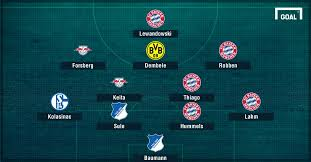

From a bettor’s perspective, the most profitable teams in the 2016–17 Bundesliga were not simply those who finished highest in the table, but those who repeatedly outperformed the expectations baked into their odds. Because prices already anticipated Bayern’s dominance and relegation struggles at the bottom, value emerged where performance and perception diverged: unexpectedly strong challengers, stable “quiet” teams and underappreciated mid-table sides.
What “Profitable Team” Means in a Betting Context
A “profitable” team for bettors is one that would have produced a positive return if you had backed them systematically at the prevailing odds, not just one that won many games. Bayern, for example, won the title with 25 victories but were almost always priced at very short odds, so the margin of error for making money on them was slim. By contrast, teams like RB Leipzig and Hoffenheim combined strong performance with lower initial expectations, meaning that for part of the season their prices did not fully reflect how good they really were, creating windows of value as they kept delivering results.
How Overperformance Relative to Expectations Created Edges
The key to identifying money-making teams in 2016–17 lies in comparing pre-season projections with actual outcomes. Preview models and pundits tended to assume Bayern at the top, Dortmund chasing, and a familiar mix of clubs in mid-table, while newly promoted RB Leipzig and a recently struggling Hoffenheim were expected to occupy more modest positions. The final table tells a different story: Leipzig finished runners-up and Hoffenheim took fourth, both qualifying for the Champions League and massively outperforming typical forecasts, whereas Leverkusen and Wolfsburg did far worse than many anticipated. The cause–effect chain is that when a team’s season-long reality outruns its reputation, there is a sustained period before markets fully adjust, and during that period backing them carefully can be highly profitable.
RB Leipzig: The Promoted Side That Paid Out
RB Leipzig entered 2016–17 as Bundesliga newcomers, and while some previews recognised their financial backing, many models still placed them in the lower half of the table, far from title contention. Instead, they produced an eight-game winning run, maintained a strong home record and finished second with 67 points, just behind Bayern, demonstrating that their pressing style and squad quality translated into consistent results from the start. For bettors, the practical impact is that early-season odds on Leipzig often assumed “promoted team risk,” and those who recognised the structural strength of their play—high-intensity pressing, clear tactical identity and effective recruitment—could capture value before prices tightened later in the campaign.
Hoffenheim: Unbeaten Runs and Underpriced Stability
Hoffenheim’s 2016–17 story under Julian Nagelsmann is another classic value case. After flirting with relegation the previous season, they were widely expected to sit in mid-table; yet they put together the league’s longest unbeaten run at 17 matches and ultimately finished fourth, securing a Champions League qualifying spot. Early in the season, odds often treated Hoffenheim as a volatile survivor rather than as a structurally solid team, so their resilience—organised defence, controlled buildup, and tactical flexibility—generated a series of results where the market had low expectations but the team quietly delivered. The effect for value-seeking bettors was a long window where backing Hoffenheim in level or slight underdog spots could produce cumulative profit, particularly in home fixtures against teams still priced heavily on reputation.
Comparing Leipzig and Hoffenheim as Value Engines
Although both Leipzig and Hoffenheim were profitable profiles, they achieved this through different mechanisms that matter for future betting decisions.
| Aspect | RB Leipzig 2016–17 | Hoffenheim 2016–17 |
| Pre-season expectation | Lower half / mid-table promoted side | Lower mid-table after relegation battle |
| Actual finish | 2nd place, 67 points | 4th place, 62 points |
| Signature pattern | High-energy pressing, streaks of wins | Long unbeaten run, structured play |
| Value window | Early and mid-season, especially at home | Extended mid-season, especially in balanced fixtures |
Leipzig’s edge came from the market underestimating how quickly an ambitious, well-constructed squad could adapt to the league, while Hoffenheim’s came from mispricing a team that had quietly transformed from relegation candidate into a stable, tactically advanced side. For bettors, recognising which mechanism is at work—aggressive newcomers or quietly improving stalwarts—helps decide when to ride a value train and when to step off as perception catches up.
Köln, Freiburg and the Quiet Money of Overachieving Mid-Table Sides
Beyond the top four, several clubs finished higher than many pre-season prediction tables suggested, with Köln in fifth and Freiburg in seventh both qualifying for European football. Pre-season projections from some statistical models had placed Köln around mid-table and Freiburg closer to the bottom, making their final positions notable overperformances relative to expectation. Bettors who followed their steady accumulation of points rather than clinging to earlier reputations could often find generous odds on them in level or slightly underdog spots, especially at home.
However, the mechanisms differed. Köln combined a solid defence with efficient scoring, whereas Freiburg’s seventh place came despite a negative goal difference, which hints at a slice of fortune in close games and a susceptibility to heavy defeats. From a betting perspective, Köln’s profile suggests more sustainable value in certain matchups, while Freiburg’s pattern warns that some of their results may have flattered them; real bettors who looked beyond the raw table to goal metrics would have adjusted stakes accordingly, backing them selectively rather than blindly.
How UFABET Can Be Used to Ride Profitable Teams Responsibly
When a bettor wants to translate these patterns into actual staking, the way they interact with their account matters as much as spotting value on paper. In contexts where a player chooses UFABET to place Bundesliga bets, a disciplined approach is to treat that sports betting service as a tracking system for value streaks rather than a place to chase favourites: by logging which teams they back repeatedly—Leipzig, Hoffenheim, Köln, or others—recording the odds taken, and checking results against expectations, they can see whether those teams truly remain “money-makers” over time. Crucially, when the market finally adjusts and prices on these clubs shorten to the point where implied probabilities match or exceed a bettor’s own estimates, ufabet168 becomes the tool for stepping away rather than doubling down, turning an account history into evidence about when a once-profitable team has become fairly or even over-priced.
Where casino online Fits Beside Team-Based Edges
Team-based edges in a league like the 2016–17 Bundesliga rely on mismatches between perception and reality that can be tracked and quantified across a season; a casino online environment operates under very different dynamics. In casino games, house edges are structurally embedded and no sequence of Leipzig wins or Hoffenheim unbeaten runs can erode the long-term disadvantage faced by the player. For bettors who enjoy both activities, consciously treating time on a casino online website as separate leisure rather than as an extension of their “hot hand” from profitable teams protects them from overestimating their overall edge. That mental separation keeps Bundesliga team-based strategies grounded in observed market inefficiencies instead of in illusions of generalised luck.
Why Perennial Giants Are Not Automatically “Money Teams”
It is tempting to assume that a dominant club like Bayern, with 25 wins, a +67 goal difference and a title secured with games to spare, must have been the most profitable team to back. In reality, their very dominance compressed their odds, leaving them as short-priced favourites in most fixtures and giving little margin for error: each unexpected draw or defeat carried a large opportunity cost relative to the low returns from their many expected wins. On the other side, chronic underperformers like Wolfsburg or Leverkusen, who finished significantly lower than some pre-season models predicted, might have cost bettors money if backed on brand name alone.
The lesson is that profit comes from systematic mispricing, not from raw win counts or historical prestige. Teams that match expectations tend to be fairly priced; those that fall short burn followers; those that quietly exceed expectations pay those who notice early and exit before the window closes. For 2016–17, Leipzig, Hoffenheim and select mid-table overachievers sit in that third category, while Bayern’s dominance mostly delivered what the market had already anticipated.
Summary
For bettors, the Bundesliga 2016–17 teams that “made money most often” were those that consistently outperformed the odds implied by pre-season narratives and mid-season perceptions, not simply the ones at the top of the table. RB Leipzig and Hoffenheim turned underestimation into long stretches of value, while clubs like Köln—and to an extent Freiburg—offered quieter opportunities when their results outpaced expectations without instant market correction. When you frame profitability in terms of repeated mispricing, track how quickly markets adjust and resist carrying team-based confidence into unrelated forms of gambling, a completed season like 2016–17 becomes a detailed template for spotting future money-making teams rather than a list of champions and relegations alone.