
Introduction
Page Size Checker Spellmistake is a useful topic for website owners, bloggers, SEO professionals, and developers who want to understand how large a web page is and how its size may affect loading speed. A website may look attractive, but if its pages contain heavy images, unnecessary scripts, large files, or excessive code, users may experience slow loading times.
Page size is an important part of website performance. Smaller and well-optimized pages usually load faster, provide a better mobile experience, and make navigation easier for visitors. A page size checker can help users identify the total weight of a web page and understand which elements may need improvement.
This article explains what Page Size Checker Spellmistake is, how it may work, why page size matters, what factors increase page weight, and how website owners can improve overall performance.
What Is Page Size Checker Spellmistake?
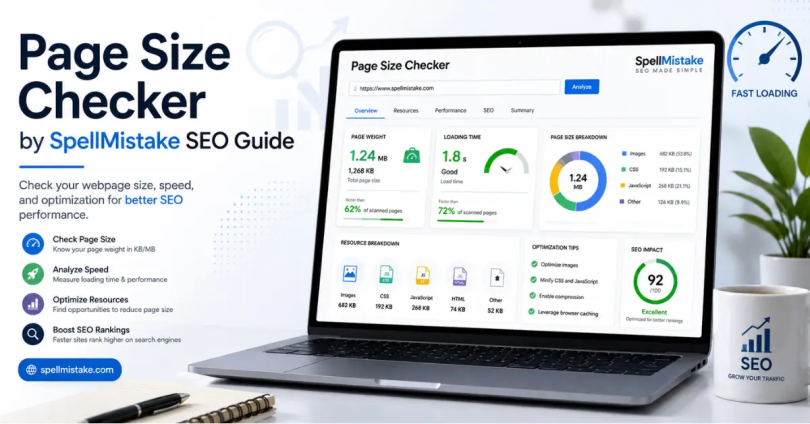
Page Size Checker Spellmistake is an online tool or feature designed to help users check the total size of a website page. It may analyze different page elements, including HTML files, CSS files, JavaScript, images, fonts, videos, and other resources.
The main purpose of such a tool is to provide a clear overview of how much data a browser needs to download before displaying a page properly.
A page size checker may display information such as:
- Total web page size
- HTML document size
- Image file size
- CSS file size
- JavaScript file size
- Number of page requests
- Loading-related information
- Performance improvement suggestions
This information can help users understand why a page is loading slowly or consuming too much mobile data.
Why Website Page Size Matters
Website page size has a direct impact on performance. When a page contains many large files, the browser needs more time to download and process them.
Visitors usually prefer websites that open quickly. If a page takes too long to load, users may leave before viewing the content. This can reduce page views, engagement, and possible conversions.
A smaller page size can provide several benefits, including:
- Faster loading speed
- Better mobile performance
- Reduced data usage
- Improved user experience
- Lower bounce rates
- Easier website navigation
- Better technical SEO performance
Page size becomes especially important for visitors using slow internet connections or limited mobile data packages.
How Page Size Checker Spellmistake May Work
A page size checker usually requires users to enter the complete URL of the page they want to analyze. The tool then scans the page and calculates the combined size of all downloadable resources.
The basic process may include:
- Entering the website URL
- Starting the page analysis
- Scanning all page resources
- Calculating the total page size
- Displaying the result
- Reviewing possible performance issues
Some tools may provide only a basic size result, while others may include detailed reports for individual files.
For example, a report may show that the page has a small HTML file but several large images. In this case, image optimization would likely provide the biggest performance improvement.
Common Elements That Increase Page Size
Several website elements can make a page heavier than necessary. Understanding these elements can help users improve their websites more effectively.
Large Images
Images are often the biggest contributor to page size. Uploading high-resolution images without compression can significantly slow down a page.
Website owners should resize images according to their display dimensions and use modern image formats where appropriate.
Unnecessary JavaScript
Large or unused JavaScript files may increase page weight and delay page interaction. Some plugins and themes load scripts that are not required on every page.
Removing unnecessary scripts can help improve page speed.
Heavy CSS Files
CSS controls the design and appearance of a website. However, unused CSS rules, duplicate styling, and large framework files can increase page size.
Minifying CSS and removing unused code may reduce file weight.
Videos and Animations
Embedded videos, background videos, animated banners, and large GIF files can make a page much heavier.
It is often better to load videos only when users choose to play them instead of loading them immediately.
Custom Fonts
Using too many font styles and font weights can increase loading time. Each font file adds extra data that the browser must download.
Website owners should use only the fonts and weights they actually need.
Third-Party Tools
Advertising networks, tracking tools, chat widgets, social media buttons, and analytics scripts can increase both page size and the number of requests.
Third-party tools should be reviewed regularly to ensure they are still useful.
Benefits of Using Page Size Checker Spellmistake
Page Size Checker Spellmistake may be helpful for both beginners and experienced website managers.
One major benefit is simplicity. Users may be able to check a page by entering only its URL, without installing complicated software.
Other possible benefits include:
- Quick page size analysis
- Identification of heavy page elements
- Support for website optimization
- Better understanding of performance issues
- Useful information for SEO audits
- Easy comparison between pages
- Assistance with mobile optimization
The tool may also help users test whether recent website changes have increased or reduced page size.
How Page Size Affects SEO
Search engines aim to provide users with useful and accessible results. Website speed and overall page experience can influence how visitors interact with a website.
A heavy page may load slowly, particularly on mobile devices. Slow performance can lead to higher bounce rates and shorter visit durations.
Page size is not the only SEO factor, but it can affect several performance-related areas, such as:
- Core Web Vitals
- Mobile usability
- User engagement
- Crawl efficiency
- Page loading speed
- Conversion performance
Reducing unnecessary page weight can support a better overall SEO strategy.
How to Reduce Website Page Size
After using Page Size Checker Spellmistake, users should review the results and focus on the largest files first.
Compress Images
Use image compression tools before uploading images to the website. Compression can reduce file size while maintaining acceptable visual quality.
Use Modern Image Formats
Formats such as WebP may provide smaller file sizes compared to traditional formats in many cases.
Minify HTML, CSS, and JavaScript
Minification removes unnecessary spaces, comments, and characters from code files.
This can reduce file sizes without changing how the website works.
Enable Browser Caching
Browser caching allows returning visitors to reuse previously downloaded files rather than downloading them again.
This can make repeat visits faster.
Remove Unused Plugins
Too many website plugins may add scripts, styles, and background requests. Removing unused plugins can improve performance and security.
Use Lazy Loading
Lazy loading delays images and videos until they are close to appearing on the user’s screen.
This reduces the amount of content loaded immediately.
Optimize Fonts
Use fewer font families and limit unnecessary font weights.
System fonts may also help reduce external font requests.
Reduce Redirects
Too many redirects can add delays before the final page begins loading.
Direct and clean URLs usually provide a better experience.
Ideal Page Size for a Website
There is no single perfect page size for every website. A simple blog page may be much smaller than an online store, news website, or media-heavy landing page.
The main goal should be to keep the page as light as reasonably possible without reducing content quality or usability.
Website owners should focus on:
- Removing unnecessary files
- Compressing large resources
- Improving loading efficiency
- Testing pages on mobile devices
- Comparing performance over time
Instead of focusing only on one number, users should also check how quickly the page becomes visible and interactive.
Who Can Use Page Size Checker Spellmistake?
Page Size Checker Spellmistake may be useful for many types of users.
Bloggers
Bloggers can use the tool to identify oversized images, heavy themes, or unnecessary plugins.
SEO Professionals
SEO specialists can include page size analysis in technical website audits.
Website Developers
Developers can test whether code changes have increased file size or page requests.
Business Owners
Business owners can check whether slow pages may be affecting leads, sales, or customer experience.
Students and Beginners
Beginners can use the tool to understand how different website elements affect performance.
Possible Limitations of a Page Size Checker
A page size checker can provide useful information, but it may not explain every performance issue.
For example, a page may have a reasonable total size but still load slowly because of poor hosting, server response delays, render-blocking resources, or third-party scripts.
Users should combine page size analysis with other performance checks, including:
- Server response time
- Mobile performance
- Image optimization
- Core Web Vitals
- JavaScript execution time
- Hosting quality
- Caching configuration
A complete website audit provides better insights than relying on one metric alone.
Tips for Accurate Page Size Testing
For more useful results, users should test more than just the homepage.
Important pages to test may include:
- Homepage
- Blog posts
- Product pages
- Category pages
- Contact page
- Landing pages
- Service pages
It is also helpful to test pages after installing a new plugin, changing a theme, adding advertisements, or uploading new media.
Regular testing can help identify performance problems before they affect a large number of visitors.
Conclusion
Page Size Checker Spellmistake can be a valuable tool for users who want to measure website page size and identify heavy resources. It can help website owners understand whether images, scripts, stylesheets, fonts, or third-party tools are increasing page weight.
A smaller and properly optimized page can load faster, use less mobile data, improve user experience, and support better technical SEO performance. However, page size should be analyzed together with server speed, caching, mobile usability, and Core Web Vitals.
Overall, Page Size Checker Spellmistake may be useful for bloggers, developers, SEO experts, students, and business owners. Regular page size testing and careful optimization can help create a faster, cleaner, and more user-friendly website.